When the Federal Reserve (the Fed) raises or cuts interest rates, the news usually talks about Wall Street or “the economy.” But what does it mean for you?
At Metco Credit Union we often hear the question: “If the Fed cuts rates, will my loan rates go down too?”
The answer: sometimes yes, sometimes no – it depends on the type of loan. Let’s break down how the Fed affects loan rates in simple terms.
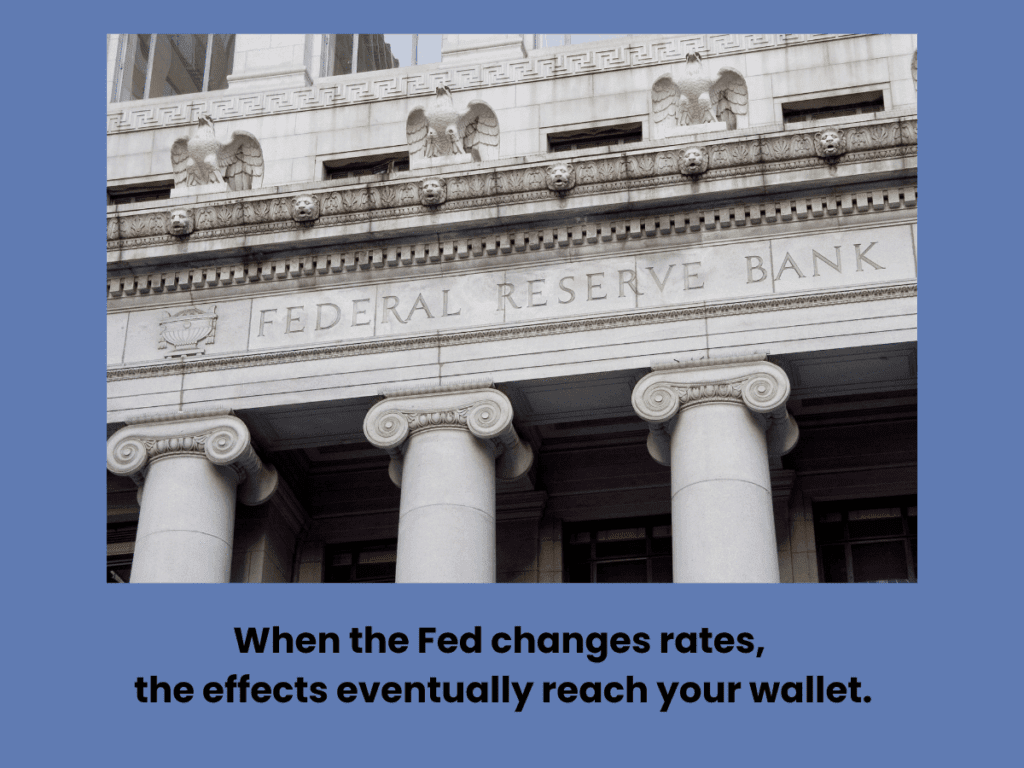
When the Fed changes interest rates, it’s adjusting something called the federal funds rate — the rate banks pay each other to borrow money overnight.
You don’t pay this rate directly, but it works like a ripple effect. Think of it as a stone dropped in a pond — the first splash happens between banks, and the ripples eventually reach your wallet.
This ripple effect explains how the Fed affects loan rates across the financial system. Most banks and credit unions tie their prime rate to the federal funds rate, meaning that when the Fed moves rates up or down, the prime rate usually moves too.
A credit union or bank’s prime rate serves as a starting point for setting loan rates.
That doesn’t mean it’s the rate you’ll personally pay. Think of it like a restaurant menu price — the base cost is listed, but what you pay depends on what you order (the loan type) and your financial “ingredients” (like credit score and history).
Because most financial institutions base their prime rate on the federal funds rate — typically about three percentage points higher — a Fed rate cut usually means the prime rate falls too. When that happens, short-term consumer loan rates often follow.
So, which loans change when the Fed adjusts rates? Mostly short-term loans tied to the prime rate, such as:
Loans with variable interest rates, like HELOCs and credit cards, typically adjust soon after the Fed acts.
Fixed-rate loans, however, only reflect new conditions if you apply for a new loan or refinance an existing one.
Mortgages don’t move directly with the Fed’s actions — unless you have an adjustable-rate mortgage (ARM).
Instead, mortgage rates are more closely tied to long-term Treasury bond yields, like the 10- or 30-year Treasury.
That means a Fed rate cut might cause mortgage rates to drop — or sometimes, rise — depending on what investors do in the bond market.
In other words, how the Fed affects loan rates isn’t always the same across every type of borrowing. Mortgage rates often depend on investor confidence, inflation expectations, and market demand for bonds.
Understanding how the Fed affects loan rates helps you make informed choices about when to borrow, refinance, or lock in a rate. At Metco Credit Union, we’re here to help you navigate rate changes with clear information and flexible lending options that fit your financial goals.
💡 Want to see how current rates are trending? Visit our Rates Page to view the latest auto loan, credit card, mortgage, and savings rates — updated regularly so you can plan with confidence.